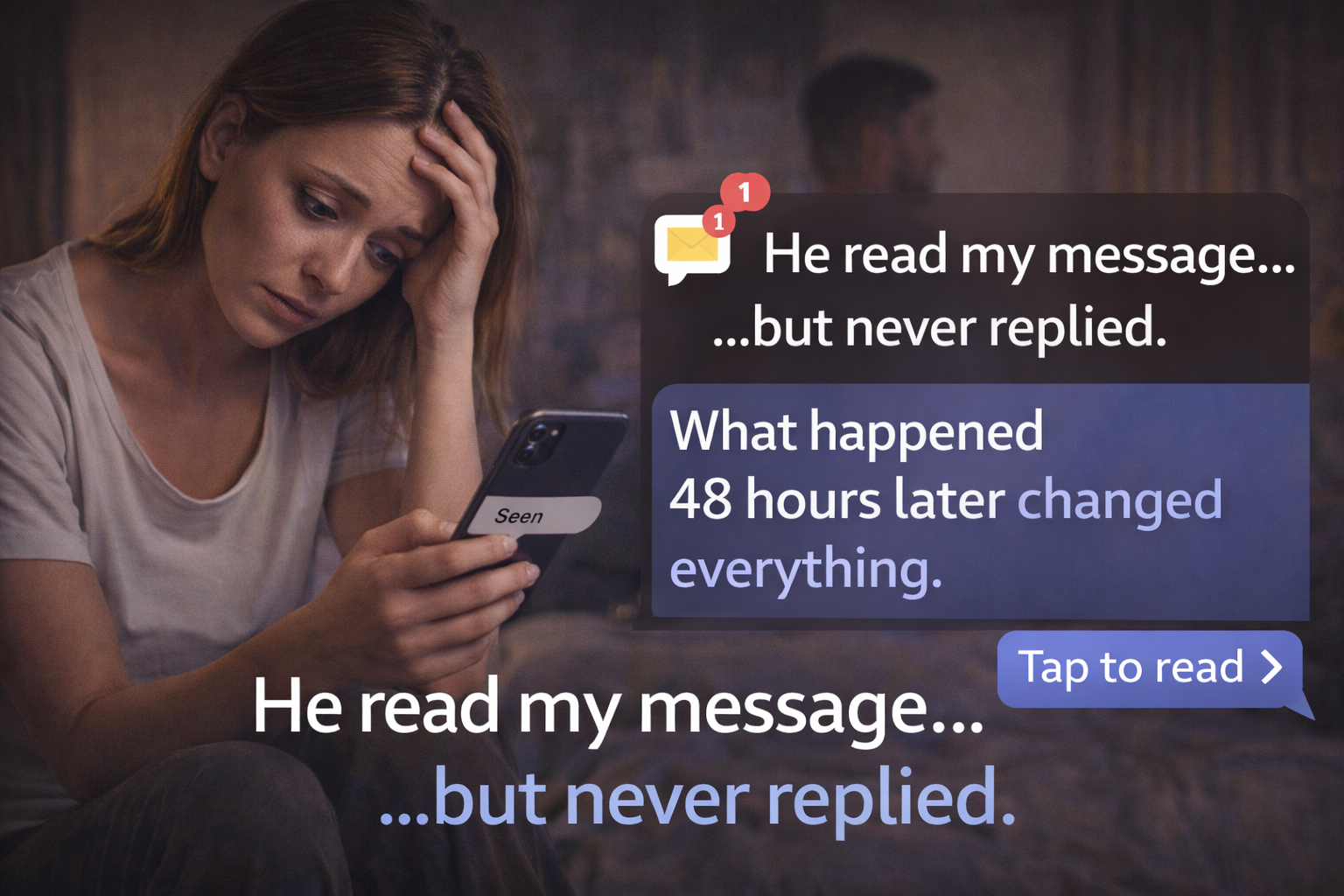
We’ve all been there.
You send the message.
You stare at the screen.
And then…
“Seen.”
No reply.
No explanation.
No closure.
Just silence.
For Emma, that silence felt louder than any argument she’d ever had.
When Silence Feels Like Rejection
Emma had finally built the courage to say what she felt.
She didn’t accuse.
She didn’t beg.
She simply said:
“I miss us. Do you?”
Two minutes later — he saw it.
And then… nothing.
One hour passed.
Then five.
Then the whole night.
Her mind did what minds do.
- “He’s done.”
- “I shouldn’t have said anything.”
- “I pushed him away.”
By the next day, she had convinced herself the relationship was over.
But here’s the twist.
It wasn’t.
The 48-Hour Rule She Didn’t Know She Was Following
What Emma didn’t realize is this:
When you send an emotional message, you don’t just trigger the other person — you trigger yourself.
Silence creates a story.
And the story is almost always worse than reality.
By hour 24, she was already grieving something that hadn’t even officially ended.
By hour 36, she was planning how to “move on.”
By hour 48…
Her phone buzzed.
The Reply That Shifted Everything
His message was simple.
“I needed time to think. I don’t want to lose you.”
That’s it.
No dramatic speech.
No long explanation.
But those two sentences destroyed the entire panic narrative she had created.
The Real Lesson Isn’t About Him
It’s about what we do in silence.
We assume.
We spiral.
We predict endings.
Most heartbreak doesn’t begin with rejection.
It begins with imagination.
Before You Panic… Read This
If someone hasn’t replied yet, ask yourself:
- Did they actually say it’s over?
- Or did your fear say it for them?
There’s a difference.
And that difference can save you from sabotaging something that still has life in it.
Final Thought
Not every silence means goodbye.
Sometimes it just means… processing.
But your reaction to that silence?
That’s where the real story begins.
👉 If this sounds familiar…
Tap below and read the full story about how one honest message brought two people back from the edge.
Because what almost ended them…
ended up rebuilding them.